
InnoEthics Week 8
What’s been happening recently in the world of ethical AI and technology ethics?

After a couple of weeks off (thanks to the joy that is university coursework), InnoEthics Weekly is back! This week we cover a recent talk in London on Can Britain become an AI superpower?, and a few thoughts on AI and chess, and the latest episode of the InnoEthics Live podcast.
Intelligence Squared: Can Britain become an AI superpower?
Skip to 54:10 to hear my question on approaches to AI governance in areas that are transnational and function across borders.
Last week, I attended a talk hosted by Intelligence Squared in London discussing the topic of ‘Can Britain Become an AI Superpower?’, with speaking guests Greg Williams, former Editor-in-Chief of WIRED, and Katie Prescott, Technology Business Editor at the Times.
The conversation was fascinating, discussing how Britain has the potential to become a superpower, however looking at the reasons for why it hasn’t achieved this yet. Points such as a lack of infrastructure and facilities for the production of AI hardware, as well as the tendency for Britain to succeed at starting up companies but struggling to scale them before they move abroad.
On the other hand, there are measures in place by the UK government, such as the ‘AI Opportunities Action Plan’, and the possibility for the UK to excel at governance and “become a trusted place were AI is built” where the UK may have the chance to emerge as a superpower of AI in another sense.
This question of Britain being ‘behind in the AI war’ is something that I have discussed on this publication previously, with InnoEthics Weekly 2 looking at the issue from a point of defence and national security.

Following their discussion, I asked Katie and Greg the following:
When we discuss points of data sovereignty and national technology governance, how does this change our perspective on AI issues that need to be arguably governed on a global scale? Examples of these transnational issues could be AI’s use in misinformation campaigns having geopolitical impacts, or the possibility of bad actors using AI for crime happening offshore and working across different nations.
The answers they provided were very interesting, looking at the relationship between what UK law would involve, and the possibility of multilateral agreements. Katie stated that it would be brilliant to have a global body to ensure all the standards for AI governance were the same, however she continued by saying she could not see it happening, bringing us back to the current approach of regulating tech state by state.
Overall, the conversation provided significant insight into what the things holding Britain back in this ‘war of AI superpowers’ could be, and what possible next steps involve.
Read the full write-up here: https://www.intelligencesquared.com/the-blog/?p=bullet-points-issue-36-can-britain-become-an-ai-superpower-the-intelligence-squared-economic-outlook
AI and Chess: A Whole New World of Creativity and Machine Intelligence
In my attempt to adhere to one of my 2026 resolutions, I have been integrating more non-fiction and biographical readings into my repertoire of books - no better place to start than in the world of AI and machine intelligence, specifically Deep Thinking: Where Machine Intelligence Ends and Human Creativity Begins, by chess Grandmaster Garry Kasparov.
For those of you unfamiliar with Kasparov’s significance in the canon of AI and machine intelligence, in 1997 he was the first world champion to lose a chess match to a computer under standard conditions, defeated by the IBM supercomputer Deep Blue in a highly publicised match.
While IBM’s DeepBlue was an example of ‘brute force computing power’, using calculations and pattern recognition to develop the best strategy of chess, examples such as in 2016 with Google DeepMind’s AlphaGo, which combine machine learning and neural networks, marked a significant milestone in AI development.
Learning about this struggle between human and machine intelligence is something that fascinated me and I focused on when initially looking at topics such as AI consciousness and ability to learn.
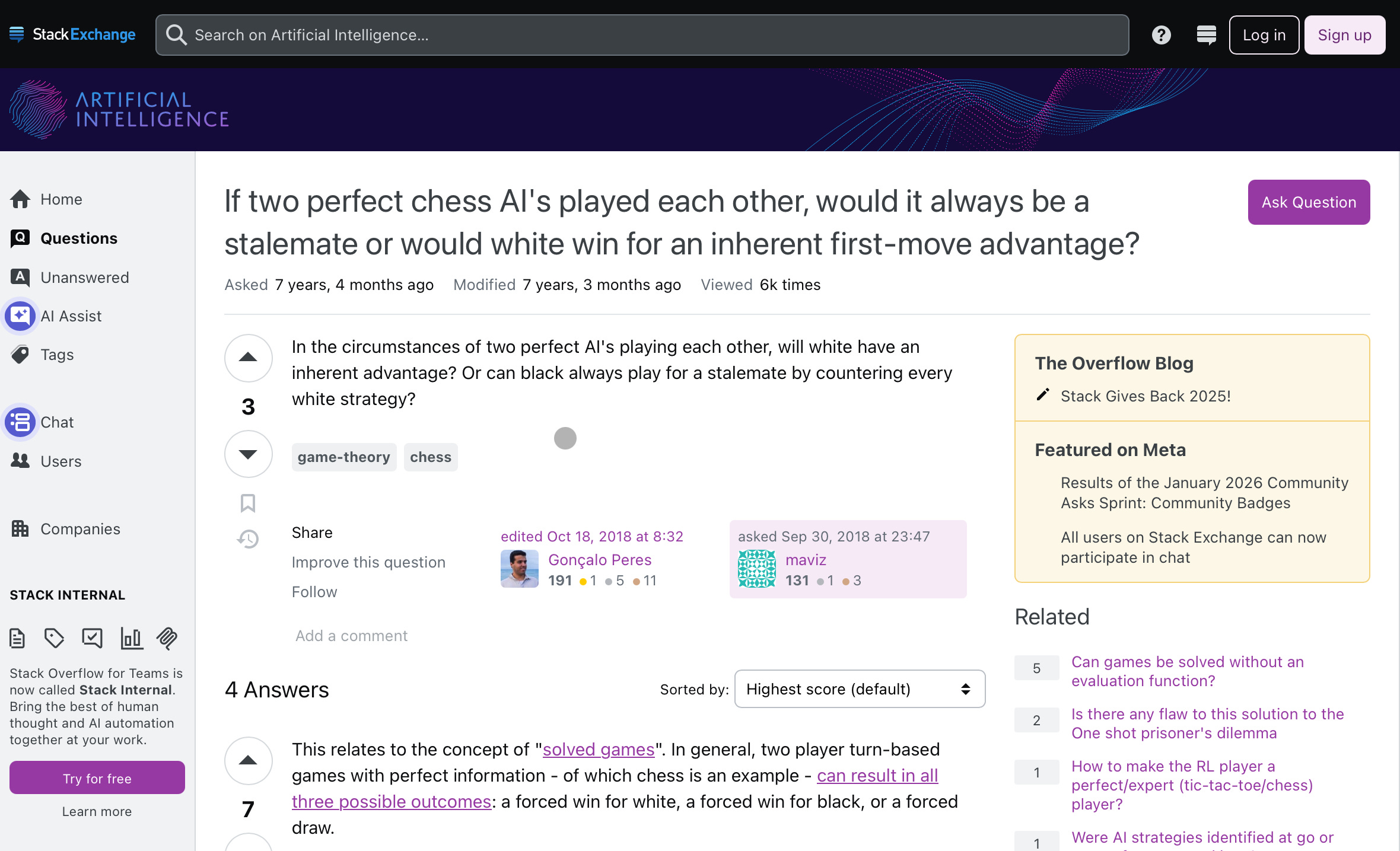
I will hold off on my full ‘ The InnoEthics Shelf’ review until I have finished the book, however one thought has been plaguing my mind since picking it up: what would be the result of two advanced chess computers playing each other?
To even begin to answer this question, you have to look at how AI’s approach to chess differs from that of a human mind, and whether the result would always be either a stalemate, or white winning due to the first-move advantage.
Understanding how the approach of ‘thinking’ by an AI is different to that of a human’s, and the difference between brute force computing and genuine ‘intelligence’, is something Kasparov writes about in fascination, and is what drew him to embrace DeepBlue’s challenge and become a integral character in the story of understanding the extent of artificial intelligence.
To read Garry Kasparov’s book, use the following link:
As an Amazon Associate I earn from qualifying purchases.
Episode 4 of InnoEthics Live, hosted by Allegra Cuomo and Daria Gjonbalaj
In this week’s episode of the InnoEthics Live podcast, Allegra and Daria discuss whether AI can ever be your friend, in particular looking at the way that people perceive, view, and interact with AI chatbots. Recapping how AI, LLMs, and chatbots work, as well as assessing recent high-profile cases involving young people and AI companions, Daria and Allegra each give their take on what an AI friend really entails.
By combining a philosophical point of view with a technical one, the InnoEthics Live podcast discusses these global and societal issues in a way that takes into consideration the multifaceted nature of these discussions.
Produced in conjunction with the InnoEthics initiative and Be the change. Media Network, this podcast is about tackling the prevalent existential questions relating to technology in our society, and how ethical approaches to this technology will allow us to develop and implement it in a way that has the most positive impact on society.
Use the link to check out our page, subscribe using your preferred media channel, and follow this page to stay up to date with fortnightly episodes: https://innoethicslive.podbean.com
We also now have an Instagram, so if you want to stay up to date there check out our page: https://www.instagram.com/innoethicslive?igsh=aW5oNGh0NTJqOGU2